Your website is your digital storefront, working 24/7 to attract customers and grow your business. In today's competitive marketplace, small businesses can no longer afford to have outdated, unprofessional websites that drive potential customers to competitors.
Yet, research shows that 64% of small businesses still don't have a website, and among those that do, 94% have significant design flaws that hurt their credibility and conversion rates.
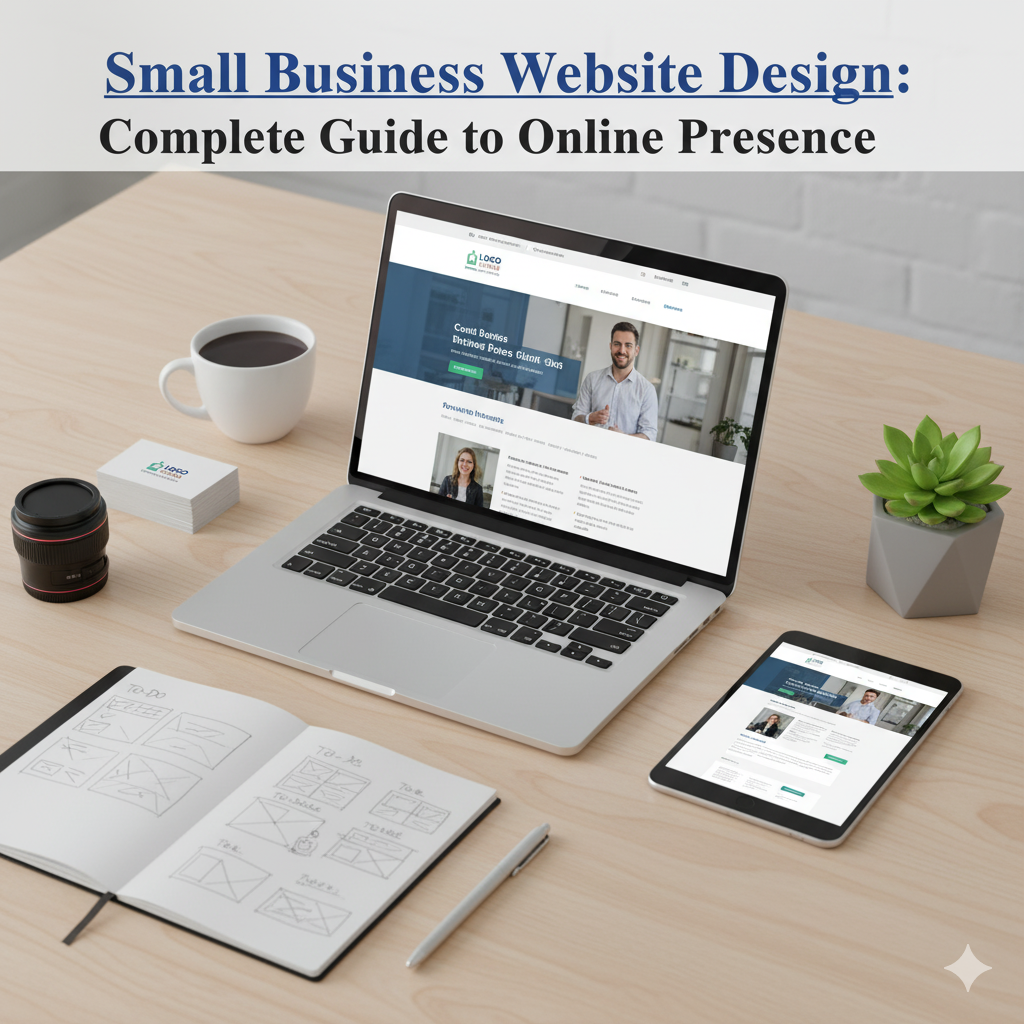
💼 Image Placeholder: Small business owner managing their professional website
Upload via Admin Panel: Professional photo of entrepreneur working on laptop with modern website design visible
This comprehensive guide will show you exactly how to design a website that not only looks professional but actively drives business growth and customer acquisition.
Why Your Small Business Website Design Matters More Than Ever
Your website often provides the first impression potential customers have of your business. Within 0.05 seconds, visitors form an opinion about your website that determines whether they'll stay or leave, according to Google's comprehensive user experience research.
📊 The Trust Factor
75% of consumers judge a company's credibility based on website design alone - Stanford Web Credibility Research
For small businesses, this split-second judgment can be the difference between gaining a new customer or losing them to a competitor with a more professional online presence.
Essential Elements of High-Converting Small Business Websites
1. Clear Value Proposition and Business Identity
The Challenge: Visitors need to understand what you do, who you serve, and why they should choose you within seconds of landing on your website.
Professional Solutions:
- Headline Clarity: Use straightforward language that immediately communicates your core service
- Subheading Support: Provide additional context about your unique approach or specialty
- Visual Consistency: Ensure your logo, colors, and imagery reflect your brand personality
- Target Audience Focus: Speak directly to your ideal customer's needs and pain points
- Unique Selling Proposition: Clearly articulate what sets you apart from competitors
✅ Example: Strong Value Proposition
"Professional Accounting Services for Growing Restaurants"
"We help restaurant owners increase profits by 15-30% through expert financial management and tax optimization."
2. Professional Visual Design That Builds Trust
Design Principles for Small Business Success:
- Clean, Uncluttered Layout: Use white space effectively to create a professional appearance
- Consistent Color Scheme: Limit your palette to 2-3 primary colors that reflect your brand
- High-Quality Photography: Invest in professional photos of your team, workspace, and products
- Readable Typography: Choose fonts that are easy to read across all devices
- Strategic Use of Visual Hierarchy: Guide visitors' attention to the most important information
🎨 Image Placeholder: Before/After website design comparison
Upload via Admin Panel: Side-by-side showing cluttered vs. clean, professional design
3. Mobile-First Design Approach
With over 60% of web traffic coming from mobile devices, your small business website must provide an exceptional mobile experience. Google now uses mobile-first indexing, meaning your mobile site directly impacts search rankings.
Mobile Optimization Essentials:
- Responsive Design: Ensure your website adapts seamlessly to all screen sizes
- Touch-Friendly Navigation: Use appropriate button sizes and spacing for finger navigation
- Fast Loading Speed: Optimize images and minimize code for quick mobile performance
- Simplified Menu Structure: Use collapsible menus and clear navigation paths
- Click-to-Call Functionality: Make it easy for mobile users to contact you directly
4. Strategic Content That Converts Visitors to Customers
Your website content should address the specific challenges your target customers face and position your business as the ideal solution.
Content Strategy Framework:
- Problem-Focused Headlines: Address specific pain points your customers experience
- Solution-Oriented Descriptions: Explain how your services solve these problems
- Benefit-Heavy Language: Focus on outcomes and results rather than features
- Social Proof Integration: Include customer testimonials and success stories
- Clear Next Steps: Guide visitors toward taking action with compelling calls-to-action
💬 Image Placeholder: Customer testimonial showcase
Upload via Admin Panel: Professional layout showing customer reviews and ratings
Page-by-Page Design Strategy for Small Business Success
Homepage: Your Digital Business Card
Your homepage serves as the central hub where visitors decide whether to explore further or leave. It must immediately answer three critical questions:
- What do you do? - Clear description of your primary service or product
- Who is it for? - Specific identification of your target customer
- Why should they care? - Compelling benefits and unique value proposition
Homepage Essential Elements:
- Hero Section: Powerful headline, supporting subtext, and primary call-to-action
- Services Overview: Brief description of your core offerings
- Social Proof: Customer testimonials, reviews, or recognitions
- About Preview: Brief introduction to your team and expertise
- Contact Information: Easy access to phone, email, and location details
About Page: Building Personal Connection
Small businesses have a significant advantage over large corporations: the ability to create personal connections with customers. Your About page should leverage this advantage.
About Page Strategy:
- Personal Story: Share why you started your business and what drives you
- Professional Credentials: Highlight relevant experience, certifications, and expertise
- Team Introduction: Include photos and brief bios of key team members
- Company Values: Communicate what your business stands for
- Mission Statement: Clearly articulate your commitment to customers
Services Page: Converting Interest to Action
Your services page should be structured to help potential customers understand exactly how you can help them and what the next steps look like.
Services Page Framework:
- Service Categories: Organize offerings into logical, easy-to-understand groups
- Detailed Descriptions: Explain what each service includes and its benefits
- Process Overview: Outline what customers can expect when working with you
- Pricing Transparency: Provide clear pricing information or ranges when possible
- Case Studies: Include specific examples of successful projects or outcomes
🛠️ Image Placeholder: Professional services showcase
Upload via Admin Panel: Clean layout showing different service offerings with icons
Contact Page: Removing Barriers to Communication
Make it as easy as possible for potential customers to reach you through multiple channels.
Contact Page Optimization:
- Multiple Contact Methods: Phone, email, contact form, and physical address
- Business Hours: Clear information about when customers can reach you
- Response Time Expectations: Let customers know when they can expect to hear back
- Location Map: Embed Google Maps for easy navigation to your business
- Contact Form: Simple, user-friendly form for initial inquiries
Local SEO Integration for Small Business Success
Local search optimization is crucial for small businesses, as 46% of all Google searches have local intent.
On-Page Local SEO Essentials
- NAP Consistency: Ensure Name, Address, Phone number are identical across all pages
- Location-Specific Keywords: Include city and region names in your content naturally
- Local Landing Pages: Create dedicated pages for each service area you cover
- Schema Markup: Implement local business structured data for search engines
- Google My Business Integration: Connect your website to your Google Business Profile
Content Marketing for Local Authority
- Local Industry Insights: Write about trends affecting your local market
- Community Involvement: Showcase your participation in local events and causes
- Customer Success Stories: Feature local customers and their achievements
- Local Partnerships: Highlight collaborations with other local businesses
- Area Expertise: Demonstrate deep knowledge of your local market
🎯 Local Search Impact
76% of people who search for something nearby visit a business within 24 hours - Google Research
Performance Optimization for Small Business Websites
Speed Optimization Strategies
Website speed directly impacts both user experience and search engine rankings. Even a 1-second delay can reduce conversions by 7%.
Speed Optimization Techniques:
- Image Compression: Optimize all images without sacrificing quality
- Hosting Quality: Choose reliable hosting with good performance metrics
- Caching Implementation: Use browser and server caching to reduce load times
- Code Minification: Remove unnecessary characters from CSS and JavaScript
- Content Delivery Network: Use CDN to serve content from locations closer to users
Security and Trust Signals
Small businesses must establish trust with potential customers who may be unfamiliar with their brand.
Trust-Building Elements:
- SSL Certificate: Ensure your website uses HTTPS encryption
- Professional Email: Use your domain name for all business email communications
- Privacy Policy: Include clear privacy and data protection policies
- Security Badges: Display relevant security certifications and guarantees
- Regular Updates: Keep your website platform and plugins current
🔒 Image Placeholder: Website security and trust indicators
Upload via Admin Panel: SSL certificate, security badges, and trust seals display
Budget-Conscious Design Solutions for Small Businesses
DIY vs. Professional Development Decision Framework
Small businesses must make strategic decisions about where to invest their limited resources for maximum impact.
Consider DIY When:
- You have significant time to dedicate to learning and implementation
- Your business model is straightforward with simple service offerings
- You're comfortable with technology and problem-solving
- Your budget is extremely limited (under $2,000)
Choose Professional Development When:
- Your time is better spent growing your business than learning web design
- You need custom functionality or complex integrations
- Your business depends heavily on online lead generation
- You want guaranteed professional results and ongoing support
Maximizing ROI from Your Website Investment
Regardless of your budget, focus on elements that directly impact business growth:
- Lead Generation Forms: Make it easy for visitors to request information
- Online Booking System: Allow customers to schedule appointments directly
- Customer Testimonials: Build credibility with authentic social proof
- Clear Contact Information: Remove all barriers to customer communication
- Mobile Optimization: Ensure seamless mobile user experience
🚀 Ready for a Professional Small Business Website?
At GoFastOnline, we specialize in creating high-converting websites specifically designed for small businesses. Our websites combine professional design with proven conversion strategies to help you:
- Establish credibility and trust with potential customers
- Generate qualified leads through strategic design and content
- Rank higher in local search results
- Provide exceptional user experience across all devices
- Grow your business with a website that works 24/7
Measuring Success: Key Metrics for Small Business Websites
Essential Analytics to Track
Focus on metrics that directly correlate with business growth:
- Conversion Rate: Percentage of visitors who become leads or customers
- Local Search Rankings: Position for keywords relevant to your business and location
- Page Load Speed: How quickly your pages load for users
- Mobile User Experience: Performance metrics specifically for mobile visitors
- Contact Form Submissions: Number of inquiries generated through your website
- Phone Call Tracking: Calls generated directly from website visits
- Bounce Rate: Percentage of visitors who leave after viewing only one page
Continuous Improvement Strategy
Your website should evolve with your business and customer needs:
- Regular Content Updates: Keep information current and add new content regularly
- Customer Feedback Integration: Use customer insights to improve user experience
- Performance Monitoring: Regularly check speed, uptime, and functionality
- SEO Optimization: Continuously optimize for better search engine visibility
- Competitive Analysis: Stay aware of what competitors are doing online
📈 Image Placeholder: Website analytics dashboard
Upload via Admin Panel: Google Analytics dashboard showing key performance metrics
Your Action Plan for Small Business Website Success
Creating a successful small business website requires strategic planning and focused execution. Follow this proven roadmap:
Phase 1: Foundation (Week 1-2)
- Define Your Goals: Clearly identify what you want your website to accomplish
- Research Your Audience: Understand your ideal customers' needs and preferences
- Analyze Competitors: Identify what's working in your industry and market
- Plan Your Content: Outline the pages and information you'll need
Phase 2: Design and Development (Week 3-6)
- Choose Your Approach: Decide between DIY and professional development
- Create Compelling Content: Write persuasive copy that converts visitors
- Implement Design: Build a professional, mobile-friendly website
- Optimize for Search: Implement local SEO and technical optimization
Phase 3: Launch and Optimization (Week 7+)
- Test Thoroughly: Ensure everything works properly across all devices
- Set Up Analytics: Implement tracking to measure performance
- Launch Strategically: Announce your new website to customers and prospects
- Monitor and Improve: Continuously optimize based on real user data
💡 Small Business Website Success
Small businesses with professional websites grow 40% faster than those without - Deloitte Research
Transform Your Small Business with Professional Website Design
Your website is one of the most important investments you can make in your small business. It works around the clock to attract customers, build credibility, and drive growth. By implementing the strategies outlined in this guide, you'll create a powerful online presence that sets your business apart from competitors.
Remember, your website isn't just about looking good—it's about generating real business results. Every element should be designed with your customers' needs in mind and optimized to convert visitors into paying customers.
Ready to take your small business to the next level? Contact GoFastOnline today for a free consultation on how we can create a high-converting website that drives real business growth.
About GoFastOnline
We specialize in creating professional, high-converting websites for small businesses. Our team understands the unique challenges small business owners face and designs solutions that deliver real results within budget constraints.
Ready to grow your business online? Visit GoFastOnline.co to see how we can help you create a website that attracts customers and drives growth.